“Venezuela is asking the world to care because its people need it. Venezuela is a country that needs to be rescued from its own government.”
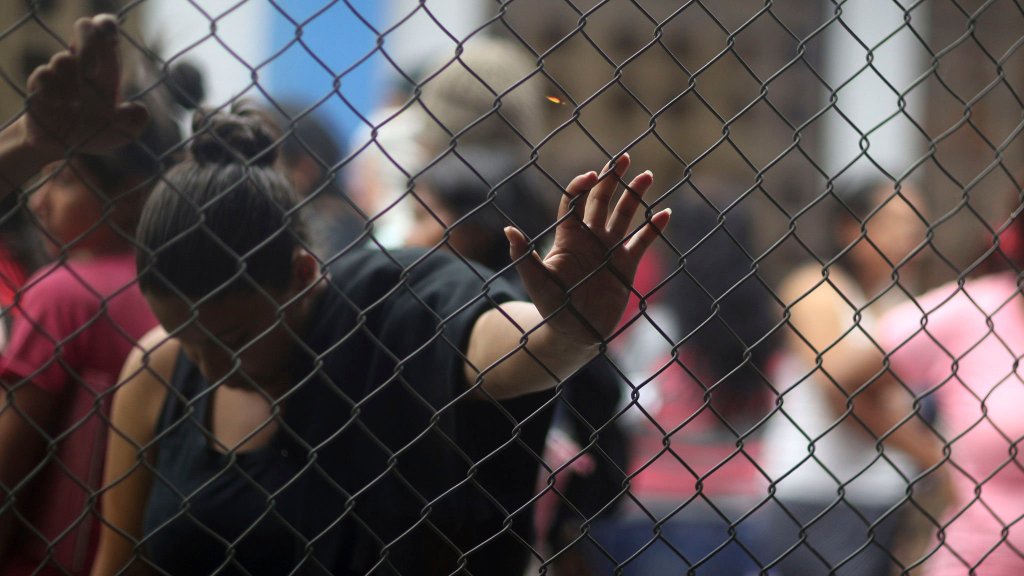
Venezuela is most known for its declining humanitarian and financial situation as a result of money mismanagement as well as political corruption and low oil prices.
The crisis has now outpaced every other crisis in the world by now, becoming the worst and largest economic crisis outside war in at least 45 years according to economists.
“It’s really hard to think of a human tragedy of this scale outside civil war,” said Kenneth Rogoff, an economics professor at Harvard University and former chief economist at the International Monetary Fund. “This will be a touchstone of disastrous policies for decades to come.”
Hyperinflation, power outages, food and medicine shortages combined threw the once-prosperous nation into crisis, resulting in the immigration of millions of Venezuelans and the declining quality of life for Venezuelans staying in the country.
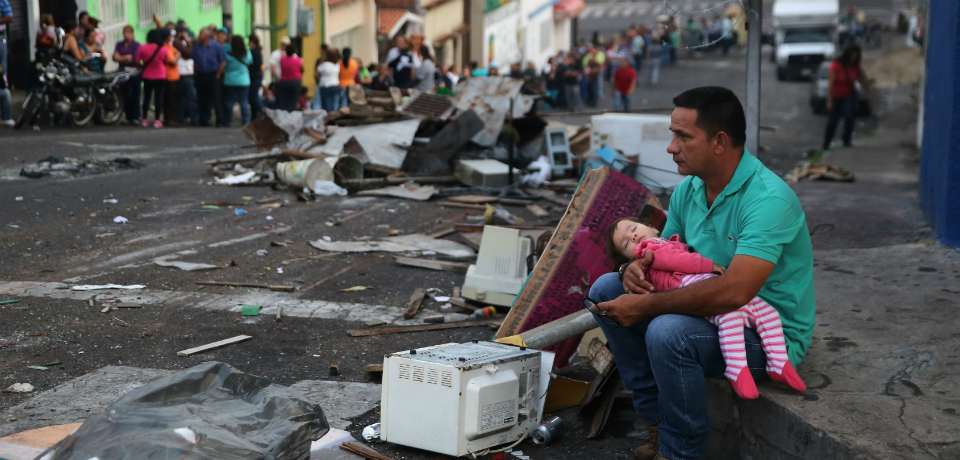
Life in Venezuela has become an impossible task, with inflation worsening each day and lack of medicine and medical services not being able to help the people, people are simply dying. Venezuela is asking the world to care because its people need it. Venezuela is a country that needs to be rescued from its government.
CORRUPTION DISGUISED AS DEMOCRACY
When Venezuela reinstated democracy in 1958, the country’s three leading political parties —shortly after, they were reduced to two— reached an agreement, which stated that they would alternate powers between them, so democracy remains as a constant in the country.
But it did not work as intended and the agreement meant to maintain democracy in Venezuela ended up taking over it and fostering the corruption that took Venezuela to the actual crisis. The parties’ leaders would choose the political candidates and block anyone trying to run independently, making the Venezuela government unable to provide for its people.
The economic crisis in 1980 made Venezuelans believe that the political system was broken, which caused an attempted coup led by lieutenant colonel Hugo Chavez Frias. It failed and all of them were incarcerated, but their message woke up the people and Chavez was starting to rise in fame, considering him a hero.
Later on, Chavez was released, as a gesture of tolerance by Rafael Caldera, President of Venezuela at the time.
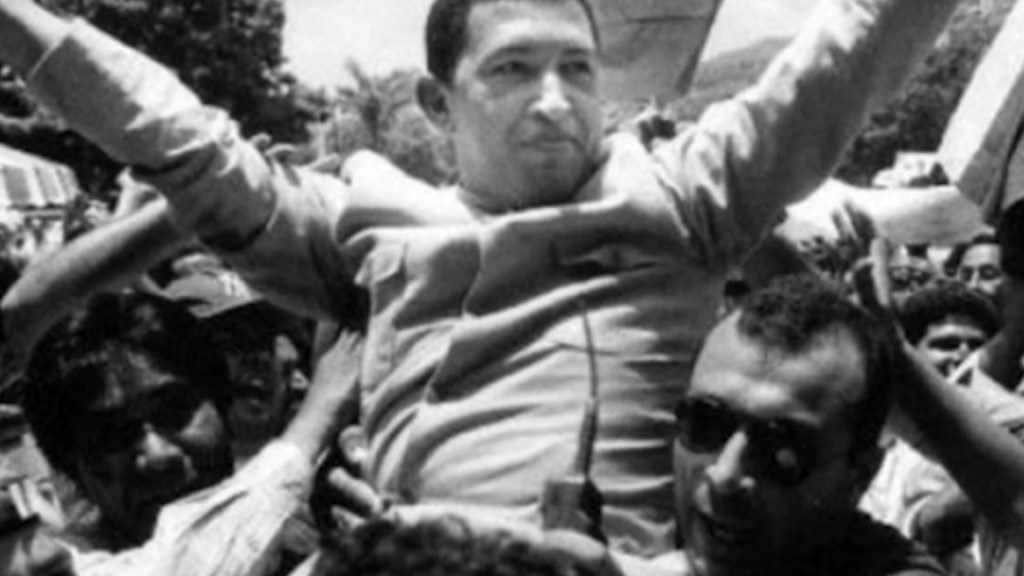
Hugo Chavez became the beloved president of Venezuela, by winning the election of 1998. His platform gave power to people that did not feel like they were being heard by the past governments: the poor along with the working class.
He also ran with a campaign that promised to end the corruption that had characterized Venezuela’s government. He won the election, taking office with the support of the poor and working-class and a healthy promising economy.
Venezuela’s economic model is defined as Petrostate, meaning most of the country’s income is controlled by its oil revenue. If the oil prices go up, there will be revenue for the country, but if the prices go down, and economic disaster may occur.
Patricia Sabga, Managing Business Editor of Al Jazeera Digital, states that “Rising crude prices in the 2000s helped the late president, Hugo Chavez, make good on his pledge to harness the nation’s oil wealth to fund welfare programs aimed at redressing inequality and poverty.”
The amount of money spent on welfare programs and subsidies for food and energy based on the socialist ideas of President Hugo Chavez was felt by Venezuelans because it meant higher income and improved standards of living, but just for a time.
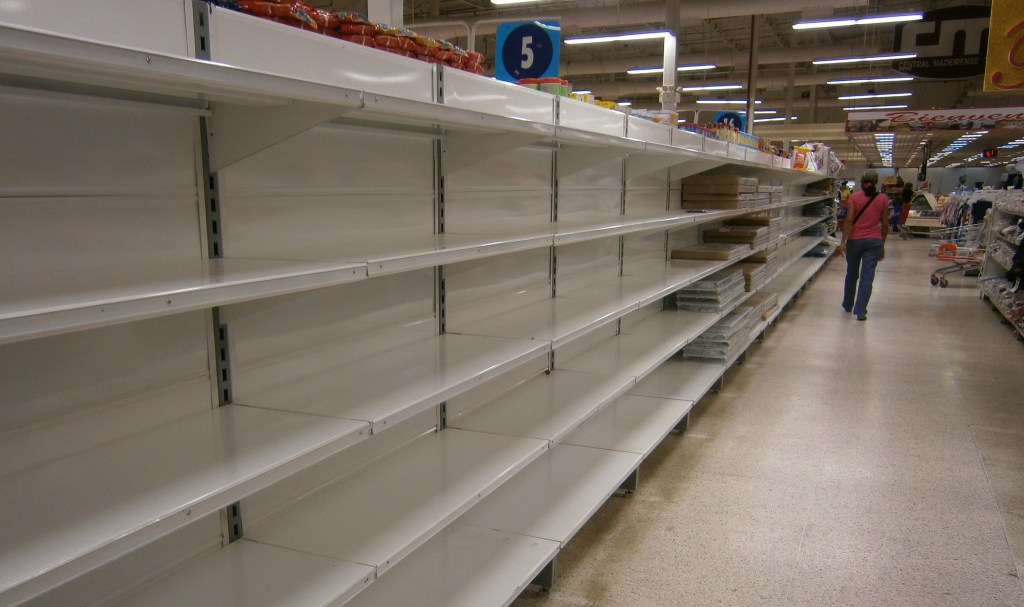
The social programs were closely linked to the price of oil, which meant that once the price of oil went down, food and essential daily things as toilet paper began to disappear from the shelves of supermarkets. The nation was falling into a big humanitarian crisis, yet President Chavez and his government didn’t do anything to avoid it.
Nathaniel Flakin, a freelance journalist and historian from New York City writes that “In Venezuela, it isn’t “socialism” that failed. What failed is a policy that kept Venezuela dependent on oil revenue, a policy that guaranteed the profits of bankers and businessmen, while the people suffer from hunger.”
Flakin argues the idea that the welfare programs and the constant increment on salary were the real problems in Venezuela’s crisis, and instead asserts it was keeping Venezuela in the same Petrostate that it had been for years. But isn’t the introduction of socialism to the economic system the reason why the welfare programs were created in the first place?
Venezuela’s lower-class unfortunately felt the effects of socialism on the country’s economic model. They had been able to live lives where they received many things for free without having to work for it so that the government could keep them happy.
With the loss of these programs and subsidies, the government began to lose control over the country’s poor. Not only did they lose the programs that had made their lives easier, but they now had lost hope in their government.
VENEZUELA… AFTER CHAVEZ
Venezuela faced a storm when President Chavez got cancer. After his illness was announced, he publicly appointed Nicolas Maduro as the perfect person to run for the presidency and continue his legacy. Chavez died shortly afterwards in 2013.
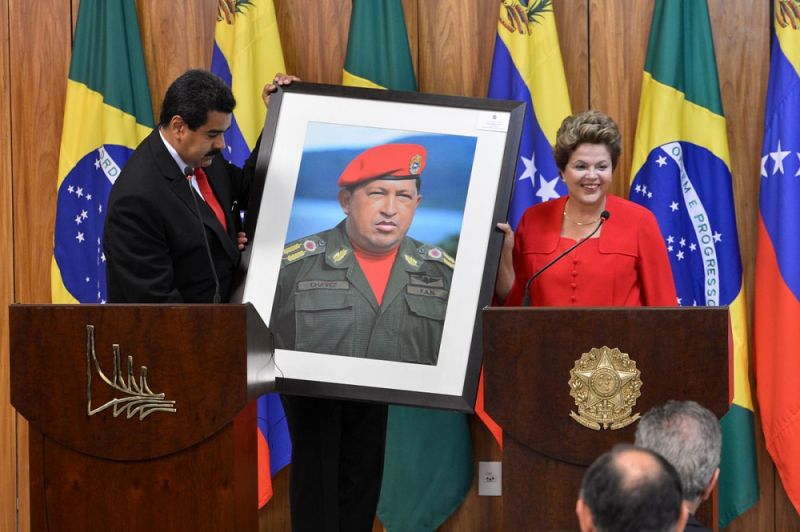
The welfare programs were already down, the people wanted to believe that this person appointed by the latest President as the best candidate for Venezuela, was the key to escape the disaster that was coming and return to the safe place that was the economy at the beginning of Chavez’ presidency. This hopeful thought made Nicolas Maduro president in April 2013.
Nicholas Casey, the New York Times’ Andes bureau chief in an interview done by Jen Kirby, the Foreign and National Security Reporter, stated that “When you get up in the morning in Caracas, the first thing you see is people lining up for food. People spend large parts of their day going from line to line. You’ll get at the end of the line and into a store and find it may just have cooking oil, and you need bread. This is the economic reality in Venezuela.”.
The president they had believed on— failed them, this forced Venezuelans to start thinking about and making decisions about their future. The only obvious choice was to leave their country.
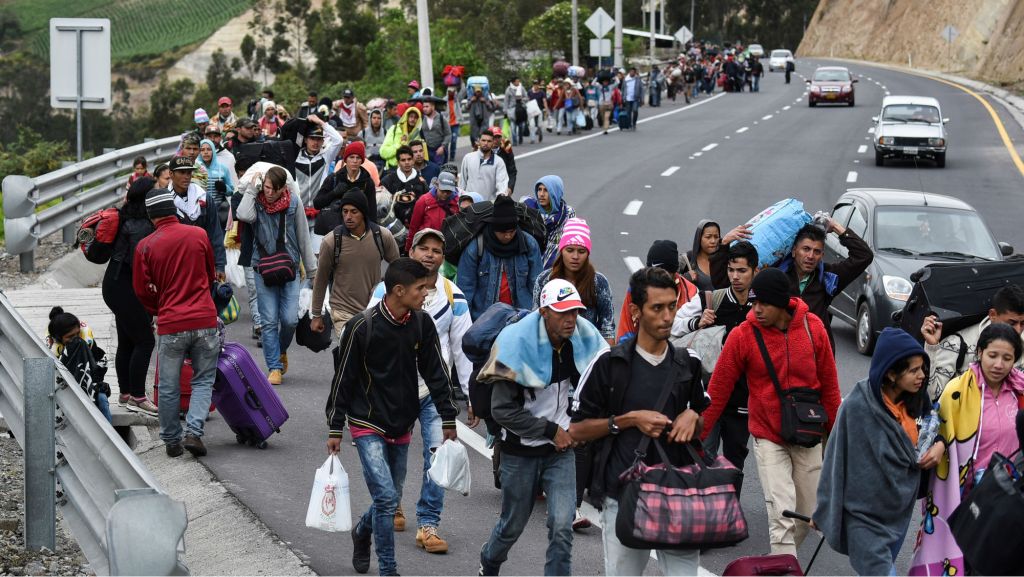
Dylan Baddour, a Freelance journalist covering Venezuela migration stated that the UN estimates that about four million people have already left Venezuela in recent years, hoping to find a better future and running away from hyperinflation, violence, and scarcity of everything essential to live. Baddour also says that this wave is affecting the economic stability in South American countries, and the total exodus in the next 18 months is expected to rise.
The situation is critical for Venezuelans. Socialism had taken away their homes, their cultures, tearing them apart from everything they’d ever known. And still, there’s no one there to help them get out of the hole that socialism and corruption caved for them.
NEEDS TO BE RESCUED FROM ITS GOVERNMENT.
The reason why countries will not act to help Venezuelans out of the dictatorship that is disguised as a democracy because by keeping the morally corrupt in Venezuela’s government these countries reap the benefits of free or cheap oil along with gold.
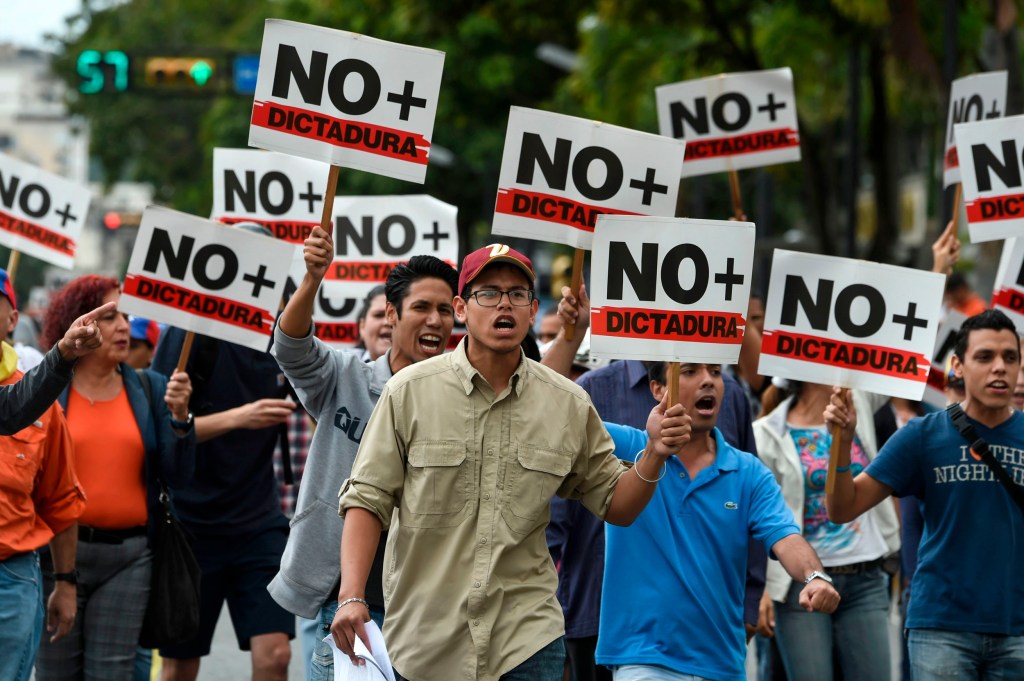
TOPSHOT – Opposition demonstrators take part in protest against the government of President Nicolas Maduro, called by opposition leader and self-proclaimed “acting president” Juan Guaido, near Parque Cristal, in Caracas on January 30, 2019. – Venezuelan President Nicolas Maduro hit out Wednesday at military “mercenaries” he says are conspiring to divide the armed forces and plot a coup as the opposition planned a new protest to force the socialist leader from power. (Photo by JUAN BARRETO / AFP)JUAN BARRETO/AFP/Getty Images
Communist and socialist governments like Cuba, Russia, and China have been taking advantage of this crisis to get benefits from it, but as a result of this, countries like the United States avoid helping Venezuela as it could create a conflict between them and countries like China and Russia.
If the governments and organizations around the world don’t take action to end the dictatorship and socialist system in Venezuela, the people’s lives will continue to be at stake.
Their freedom and civil rights have been compromised for way too long now due to the different interests that governments around the world have in the country.
While the world gets to learn from the mistakes of Venezuela, the citizens are not afforded the same privilege. The reality is that while socialism played a part in the country’s undoing, it is not all to blame, corruption was also part of the mix.
Living in a once successful nation that showed great potential just to see it fall into stagnation then crisis due to detrimental circumstances such as political corruption, money mismanagement, inflation, poor medical services, along with the loss of a promising president must’ve been a jarring shift in life for many Venezuelans.
A combination like this would’ve been enough to bring on any country’s downfall. Hopefully, we can continue to learn from Venezuela while remembering the people who suffered and continue to suffer, from the practices that led to the country’s downfall.
 Venezuela: The Country Once Named Latin America’s Exemplar.